AI & Machine Learning
- Explainable AI (XAI)
- Physics-Informed Neural Networks
- Deep Learning
- Computer Vision
- Scientific Computing

Co-Founder · AI/ML Researcher · Space Technology Enthusiast
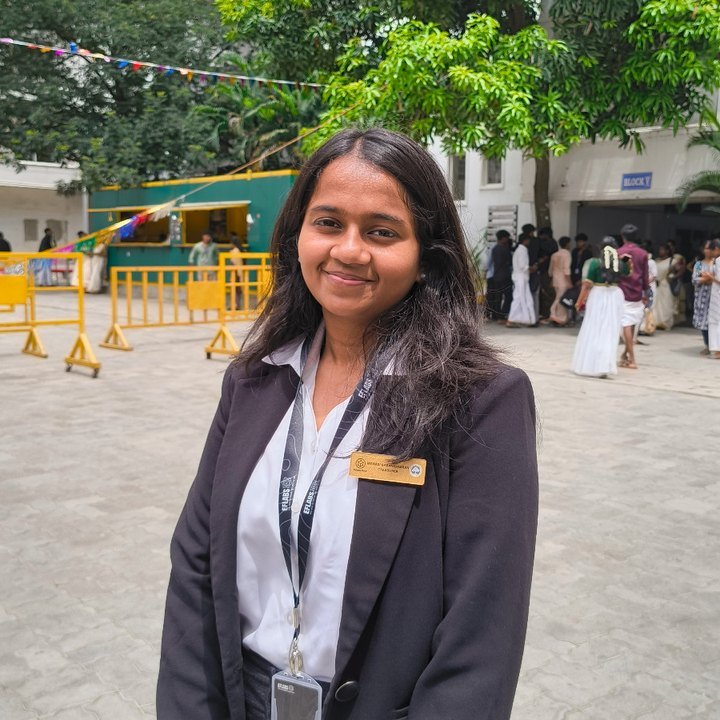
Manasi Baranidharan is the Co-Founder of EFLABS and an Artificial Intelligence and Machine Learning student, researcher and technologist with a strong interest in emerging technologies, space science and the future of the space industry. She is currently pursuing her B.Sc. in Artificial Intelligence and Machine Learning at SRM Institute of Science and Technology (Ramapuram Campus).
At EFLABS, Manasi contributes to research, innovation and the development of technology-driven solutions, combining artificial intelligence, machine learning and scientific computing to address real-world challenges. Her technical interests include Explainable AI (XAI), Physics-Informed Neural Networks (PINNs), deep learning, computer vision and AI applications in scientific and space-related domains.
Beyond AI/ML, Manasi has a strong interest in space technologies and space law, with a particular curiosity about the intersection of technological innovation, space exploration, satellite systems, international space governance and the legal and policy frameworks shaping the future of space activities. She is passionate about understanding how emerging technologies can evolve alongside responsible and sustainable approaches to space exploration.
Her research work includes developing physics-informed machine learning approaches for solar flare nowcasting and forecasting using data from India’s Aditya-L1 mission. She has also participated in national-level innovation initiatives, including the Bharatiya Antariksh Hackathon 2026, where she led a technical team working on AI-based solar flare forecasting using X-ray datasets.
As a Co-Founder of EFLABS, Manasi aims to bridge AI, scientific research, space technology and emerging space policy, transforming innovative ideas into practical solutions while exploring the technological and legal challenges that will shape the next generation of space exploration.
Led a technical team building AI-based solar flare forecasting models using X-ray datasets.
Developing physics-informed machine learning approaches for solar flare nowcasting and forecasting with Aditya-L1 data.